
Why the Old Incentive Playbook Doesn’t Work Anymore, Especially for Multi-Unit Operators
I’ve been in franchise development long enough to remember when the pitch was simple: territory, brand story and a discounted franchise fee if you signed by year-end. That combination used to move a prospect forward. It doesn’t to the same degree anymore, and if you’re still building your incentive strategy around it, you may be wondering why development numbers have flattened even though brand awareness has never been higher.
The typical franchise buyer today is not the same as in years past. FRANdata’s 2026 Franchising Economic Outlook, produced with the International Franchise Association, found that roughly 20% of franchisees now operate more than one unit — and that a fifth of the franchisee population controls nearly 60% of all franchised locations in the country. Industry growth isn’t coming from first-time owners anymore. It’s coming from operators who already run five, 10 or 20 units and are deciding on their next investment.
That’s a fundamentally different sales conversation. A first-time buyer is asking if they can afford to move forward. A multi-unit operator is asking why this brand should get their capital and team’s bandwidth this quarter instead of the other deals on their desk that require attention. A modest fee discount barely registers with that operator. They’re not deciding whether to own a business — they already own several. They’re deciding which brand gets their next dollar and stretch of attention, and that comes down to cash flow, not just the overall cost to build.
What Royalty Relief Actually Does
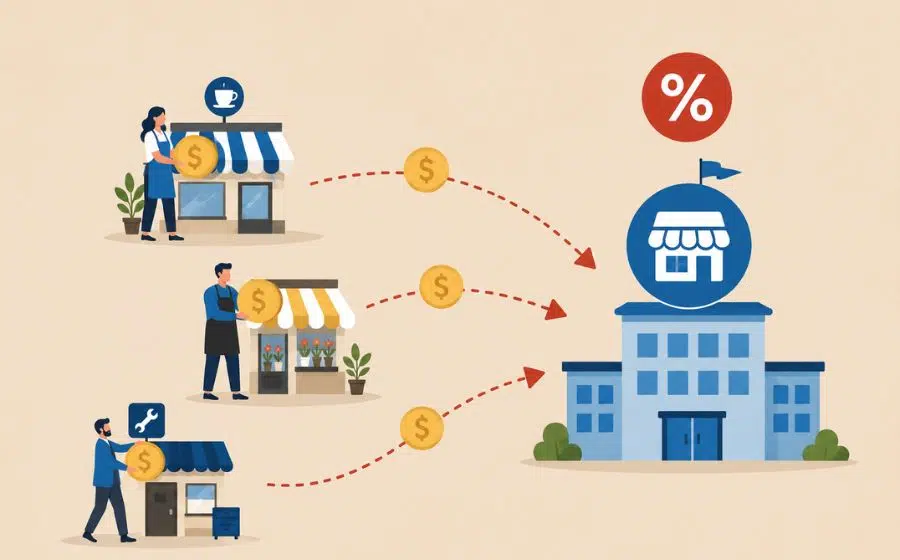
Put simply, the incentive that wins today isn’t the one that lowers the price of getting in the door. It’s the one that protects a franchisee’s cash flow during the exact window when a new location is most vulnerable. That’s a different tool than a fee discount, not a version of the same thing.
A franchise fee discount lowers the cost to start. Royalty relief does something else — it delays the cost of running the business during a time when a new location can least afford it. Any operator who’s opened a unit knows what those first several months are like: You’re hiring a team that doesn’t know your systems, building local awareness from zero in some instances, and sales are probably running below where they’ll eventually land.
Every dollar that isn’t leaving as a royalty payment during that window stays in payroll, local marketing or simply in the runway to get the unit humming. That’s not giving something away. It’s a franchisor investing in the timing of a franchisee’s growth instead of just reducing the entry fee.
A Different Pitch for Single- and Multi-Unit Owners
For single-unit owners putting their savings into their first businesses, royalty relief tied to opening timelines reduces personal risk. It buys room to breathe through the most challenging year of ownership when they’re still learning the rhythm of running their own operations.
For multi-unit operators, it’s not about personal risk. It’s usually about which brand to pick over all the others competing for their time and capital. Royalty relief tied to development speed, such as signing a lease within a defined window, gives those operators a real reason to move site selection to the top of their list this quarter instead of letting it drift into the future. It rewards speed and certainty, and anyone juggling four or five builds at once knows those two things matter more than almost anything else you can provide.
Franchise attorneys who track incentive design across different systems all point to the same thing — differentiation is what gets results. If you give someone opening their fifth unit the exact same deal as someone opening their first, you may be spending money on an operator who was probably going to sign anyway. The real return comes from directing the incentive toward the operator who’s still deciding — the one weighing your brand against two or three others. Scale the relief to match that decision, whether it’s how fast they commit to a lease or how many units they already run, and you’ll see it show up in your pipeline.
Principles that Move a Pipeline
There are a few things I’d tell any development team building one of these programs.
- Tie relief to a real decision point, not an arbitrary cutoff. A lease signing gates a franchisee’s actual opening timeline. Whether that’s built around a single deadline or staggered, what matters is that it rewards the operators who commit to real estate sooner instead of treating everyone who eventually signs the same way.
- Keep it simple enough to say in one sentence. If a prospective owner’s attorney needs a spreadsheet to figure out what it’s worth, you’ve lost most of its persuasive power before the conversation starts.
- Don’t let it stand alone. Royalty relief works best paired with real investment in field support, marketing and site selection assistance. Without that pairing, it can read as a coupon or a number on a page with nothing behind it. A discount by itself doesn’t tell a prospective owner what it’s like to operate inside your system. The support around it does.
- Finally, speak to both audiences. A first-time buyer and a multi-unit, multi-brand prospect are running your incentive through completely different financial models. Development marketing that speaks to only one of them leaves opportunity on the table.
Multi-unit concentration isn’t slowing down, and it’s reshaping incentive programs. The fee was never really what drove a signature anyway — it was whether an operator felt confident betting their investment on your brand over someone else’s. Royalty relief answers that question directly, for the first-time owner and the 20-unit operator. Get the timing right and the incentive becomes the strategy that can close the deal.
Anyone evaluating a franchise right now should look past the number and ask what the incentive is tied to. A number tied to something real — a lease signing, another location or a specific quarter — shows a brand has thought about how to help franchise owners in year one.