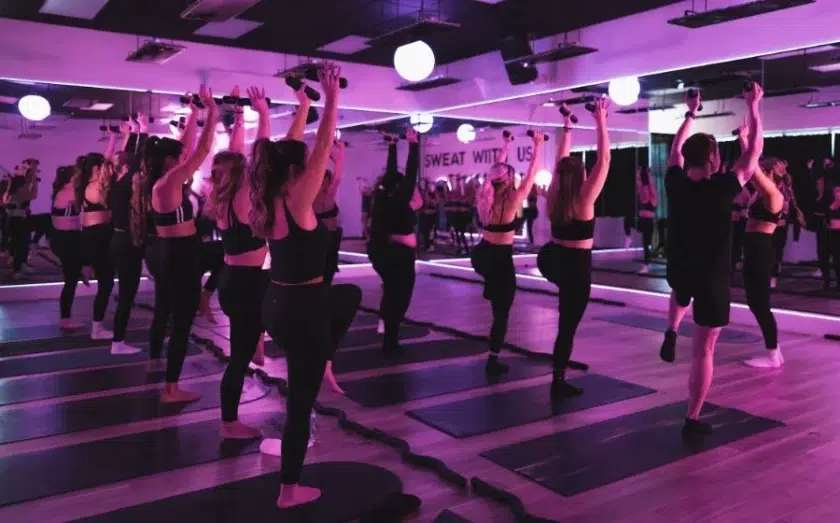

Infrared Heat Powers this Mat-Based Pilates Workout Designed for Strength, Sweat and Recovery

- Vibe House combines heat, strength and Pilates into one low-impact workout.
- Founder Rosalie Black built the concept after going to three gyms for one routine.
- The franchise model is scalable, purpose-driven and designed for sustainable growth.

Before entrepreneur Rosalie Black launched the first Vibe House Hot Pilates studio, she routinely went to three different gyms just to get the workout she wanted.
“I longed for a workout that didn’t exist in my area,” Black says. “I really loved the energy of group cardio workouts. I loved going to hot yoga… and I loved Pilates, but I couldn’t find a place that had all three in one.”
So instead of continuing to bounce between studios, she decided to build the workout herself.
She created Vibe House in Crown Point, Ind., in 2023, a high-energy, low-impact hot Pilates concept tapping into two of the fastest-growing segments in boutique fitness, heat and Pilates.
According to Women’s Health, participation in Pilates in the U.S. grew from 9.2 million people in 2019 to 12.9 million in 2025. Among its many benefits, it’s a low impact workout that’s gentle on joints and accessible to most levels of exercisers.
Heated fitness classes are surging in popularity for their many benefits. According to Dr. Dominic King, a sports medicine physician at the Cleveland Clinic, heated workouts increase blood flow and warm muscle tissue, which can enhance flexibility.
In addition to reducing stiffness and potentially preventing injuries, the elevated temperature slightly boosts cardiovascular demand, possibly burning more calories than a standard workout at a regular temperature, according to CNN.com.
Vibe House is different from every other Pilates franchise. It delivers a mat-based workout with minimal equipment — no reformers — combined with infrared heat, a combination no other franchise concept currently offers.

Customer Experience
Black created Vibe House with a priority on the customer experience.
“Our members feel welcomed right when they walk in,” Black says. “Our staff is really welcoming and inviting.”
Then comes the unique workout. “You’ve got high intensity, you’ve got music, you’ve got movement, you’ve got heat,” Black says.
Classes are designed to feel energizing and to leave people feeling strong instead of broken down, which is a big reason members keep coming back.
Three Ways to Train
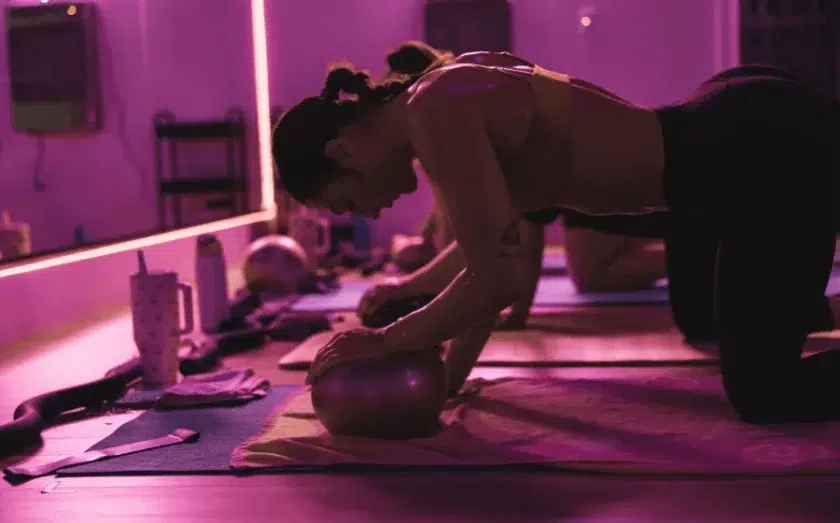

Vibe House offers three core class formats, all built around hot Pilates:
- Hot Pilates Sculpt, which moves faster and focuses heavily on core engagement
- Hot Pilates Power, which is slower, more athletic and strength-driven
- Hot Pilates Restore, focused on flexibility, mobility and recovery
“We have many members who will take double classes,” Black says. “They’ll do a power class and then follow it up with a restorative class, for example.”
Because the workouts are low impact, they’re sustainable. Members can attend frequently without worrying about joint strain or burnout.
The infrared heat — typically between 95 and 105 degrees — adds another layer.
“Infrared heat actually heats the body, not the room,” Black says. “It’s a cellular heat.”
The Franchise Opportunity
While Black didn’t set out to build a franchise initially, her background helped her lay the foundation for one.
Before fitness, she spent more than a decade in real estate — an industry that demands discipline, systems and constant attention to customer service.
She was also building Vibe House while pregnant, so she needed the business to run smoothly without her being on-site every day.
“She was systematically building a franchise system without realizing it,” says Marisa Kochnover, director of franchise development at REP’M Group, a franchise development company which supports the brand. “She built the business to run everything without her.”
Kochnover, who has been a multi-unit franchise owner and executive for major fitness franchises, is a huge fan of this concept. “There’s nothing else out there like this. Since we started offering the franchise opportunity in January, we’ve had a ton of interest.”
The idea of franchising came from members. “People assumed Vibe House was already a franchise, but it was the last thing from my mind,” Black says.
After successfully opening a second corporate location in Valparaiso, Ind., in 2025, Black realized franchising was the way to go.
Working with REP’M Group

To help with sales and growth, Black teamed up with REP’M Group.
“Culture was a major factor for me. So was strategy. They love fitness, just like I love fitness. I knew immediately that this was the right partner for us.”
From REP’M’s perspective, Vibe House checked all the right boxes as an ideal franchisor to support.
“We look at the founder,” Kochnover says. “Rosie embodies strength, leadership and grit. She’s culture-forward, and that’s huge at REP’M.”
REP’M also saw a business that was already optimized for growth, with systems, consistency and strong unit-level economics.
A Smarter Pilates Business Model
Unlike traditional Pilates studios, there are no expensive reformer machines. “You have mats. You have weights,” Kochnover says.
That keeps build-out costs lower and allows studios — typically 1,600 to 2,000 square feet — to accommodate 30 to 40 people per class. Traditional Pilates studios often max out around 12 to 15.
Total investment ranges from $297,100 to $466,700, depending on market and build-out. Studios typically operate with four to six instructors and receive extensive marketing, pre-sale and programming support as well as instructor training.
New choreography, playlists and movements are rolled out every 90 days to keep the experience fresh.
Ideal Franchisees
The ideal Vibe House franchisee doesn’t need a fitness background, but they do need strong leadership skills.
“You really need to care about people, culture and execution,” Black says.
“It’s about being the vibe behind the vibe,” Kochnover says. “A leader. A galvanizer. Someone who truly cares about community.”
For the right owner, the payoff goes beyond financial returns. “We get so much amazing feedback about how we’ve changed people’s lives,” Black says. “This is a purpose-driven business.”
Learn more about the Vibe House franchise opportunity.